Why Strength Training Should Be Your Foundation
If you walk into any gym in Nairobi and ask a certified personal trainer what the single most impactful thing a beginner can do for their health and body composition, the answer is almost always the same: start strength training.
Strength training - also called resistance training or weight training - involves using external resistance (barbells, dumbbells, machines, or your own body weight) to progressively challenge your muscles. The benefits go far beyond just looking more muscular:
- Burns more fat long-term. Muscle tissue is metabolically active. More muscle = higher resting metabolic rate = more calories burned 24/7.
- Improves bone density. Critical for long-term health, especially for women approaching or over 40.
- Reduces chronic pain. Proper strength training strengthens the muscles around joints, dramatically reducing back pain, knee pain, and shoulder issues that affect many desk workers in Nairobi.
- Boosts confidence and mental health. The progressive nature of strength training - lifting more than you could last week - is uniquely powerful for building self-confidence.
- Improves everyday function. Carrying groceries, climbing stairs, playing with children - all easier when you're strong.
Before Your First Session: What to Know
Walking into a gym as a beginner in Nairobi without any guidance is one of the most common ways people get injured or give up within the first month. Before you pick up a single weight, there are a few important things to establish:
Get a Baseline Assessment
A good gym trainer in Nairobi will always begin with a physical assessment. This identifies your current strength level, mobility limitations, any existing injuries, and postural imbalances that need to be addressed before you add load. Skipping this step is how people end up with herniated discs or shoulder impingements.
Understand Your Goal
Strength training looks different depending on your goal. Building raw strength uses heavier loads and lower repetitions (3–5 reps). Building muscle size (hypertrophy) uses moderate loads and higher reps (8–12). Improving muscular endurance uses lighter loads and high reps (15–20). Make sure your programme matches your actual goal.
The 5 Foundational Movement Patterns
Rather than thinking in terms of individual exercises, Elvis Baranga coaches beginners through five fundamental movement patterns. Master these and you have the foundation for every other strength exercise:
- Squat - Goblet squat, bodyweight squat, barbell back squat. Develops legs, glutes, and core.
- Hip hinge - Romanian deadlift, conventional deadlift. Develops posterior chain (hamstrings, glutes, lower back).
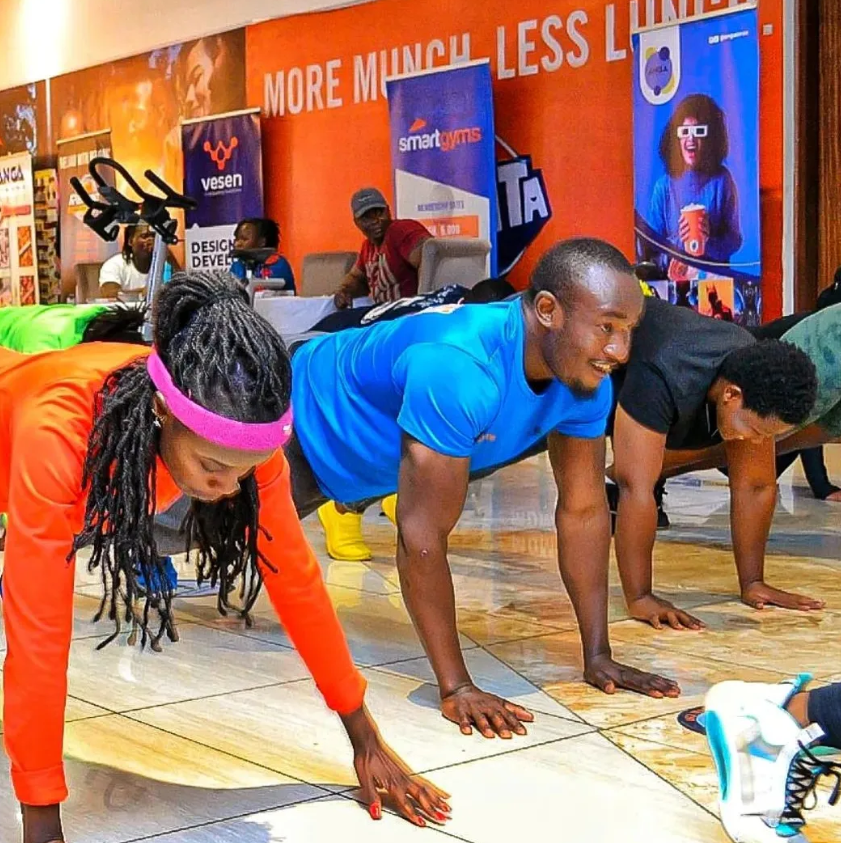
- Push - Push-up, dumbbell bench press, overhead press. Develops chest, shoulders, triceps.
- Pull - Lat pulldown, dumbbell row, chin-up. Develops back and biceps.
- Carry - Farmer's carry, suitcase carry. Builds functional strength, grip, and core stability.
A well-designed beginner programme will hit all five patterns every week.
Progressive Overload: The Key to Results
The single most important concept in strength training is progressive overload - the principle of gradually increasing the demand on your muscles over time. Your muscles only grow and strengthen when they are subjected to a stress slightly greater than what they're used to.
Progressive overload can be applied by:
- Increasing the weight lifted (most common)
- Increasing the number of repetitions at the same weight
- Increasing the number of sets
- Decreasing rest time between sets
- Improving the range of motion or form quality
A certified personal trainer like Elvis Baranga tracks these variables session by session, ensuring you're always moving forward without overtraining or getting injured.
Common Beginner Mistakes to Avoid
Elvis sees these same mistakes constantly in Nairobi gyms:
- Lifting too heavy too soon. Ego lifting is the fastest route to injury. Start lighter than you think you need to, perfect your form, then progress.
- Skipping compound movements for isolation. Many beginners go straight to bicep curls and cable flyes. Compound lifts (squats, deadlifts, rows) deliver far more results per unit of time.
- Not eating enough protein. You cannot build muscle in a protein deficit. Aim for 1.6–2.2g of protein per kg of body weight daily. See our diet guide for Kenya-specific advice.
- Inconsistency. Three good weeks followed by two weeks off is the most common pattern. Consistency - even 2 sessions per week - beats intensity every time.
- Ignoring rest and recovery. Muscles grow during rest, not during training. Getting 7–9 hours of sleep and taking adequate rest days is non-negotiable.
Should You Hire a Personal Trainer for Strength Training?
For a complete beginner, working with a certified personal trainer in Nairobi for at least the first 8–12 weeks is strongly recommended. Here's why: the learning curve in strength training is real. Form errors that feel fine in the moment can cause serious injury compounded over months of training. A trainer spots and corrects these errors before they become problems.
Beyond safety, a gym trainer will ensure you're following an intelligent programme structure - not random YouTube workouts - and will push you past the mental barriers that appear every time a weight feels heavy.
"The gym can be intimidating if you're new. My job as your trainer is to remove that intimidation, teach you the fundamentals properly, and make sure you love training within the first month." - Elvis Baranga
Elvis Baranga at Elite Flex offers personal training for strength beginners across Nairobi - at his Westlands gym, at your home, or virtually online. Book a session and let's get you started the right way.